Kensington and Chelsea council rules for removals and parking
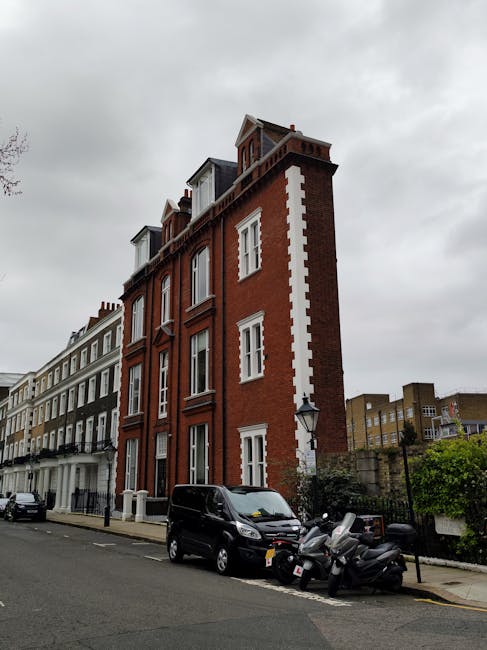
If you are planning a move in Kensington and Chelsea, the parking side of the job can feel more stressful than the packing. One minute you are organising boxes, the next you are worrying about loading bays, suspension notices, permits, and whether the van can stop without causing a headache for everyone on the street. That is exactly why understanding Kensington and Chelsea council rules for removals and parking matters before moving day arrives.
This guide breaks the subject down in plain English. You will learn what the rules usually mean in practice, how they affect house moves and flat moves, what to check before booking a van, and how to avoid the classic last-minute scramble. There are a few local quirks in this part of London, and to be fair, they can trip up even organised people. Let's make it simpler.
- Why Kensington and Chelsea council rules for removals and parking matters
- How Kensington and Chelsea council rules for removals and parking works
- Key benefits and practical advantages
- Who this is for and when it makes sense
- Step-by-step guidance
- Expert tips for better results
- Common mistakes to avoid
- Tools, resources and recommendations
- Law, compliance, standards, or best practice
- Options, methods, or comparison table
- Case study or real-world example
- Practical checklist
- Conclusion
- Frequently asked questions
Why Kensington and Chelsea council rules for removals and parking matters
Kensington and Chelsea is not the kind of place where you can just roll up with a large van and hope for the best. Streets are often narrow, bays are tightly managed, and even a short stop can affect traffic, pedestrians, and neighbouring residents. That is why removals planning in this borough often begins with parking, not boxes.
The practical impact is simple: if your vehicle cannot stop legally and safely near the property, everything else takes longer. Labour costs can creep up, access gets awkward, and the move can become more tiring than it needs to be. In older mansion blocks, terraced streets, or busy main roads, the gap between "easy move" and "messy move" is sometimes just a few metres of parking space.
The rules also matter because removals are rarely just about the moving crew. They affect your neighbours, building management, and sometimes the smooth running of local traffic. If you are moving from a flat without a lift, every extra trip from the van to the front door becomes more expensive in time and effort. That is the kind of detail people remember at 7.30 in the morning when the kettle is still only half-boiled.
There is also a reassurance factor. When parking is sorted properly, the day tends to feel calmer. You are not watching the clock and hoping nobody has decided to park in the same bay you need. You are not sending someone down the road to "just keep an eye on the van." The whole thing is steadier, and that matters more than people admit.
How Kensington and Chelsea council rules for removals and parking works
At a practical level, removals parking in Kensington and Chelsea usually comes down to a few moving parts: whether the vehicle can stop legally, whether a bay is available, whether any restrictions apply, and whether additional permission or suspension is needed. The exact rules can vary by street and by time of day, so there is no one-size-fits-all answer.
For most moves, you should think in terms of access first, parking second, and timing third. That means checking where the vehicle can stand, how long it can remain, and whether the building or street has restrictions such as resident-only bays, pay-and-display bays, yellow line controls, school restrictions, or loading limitations. In some cases, a loading bay may be the best option. In others, a temporary suspension of a parking bay may be the only practical route.
Removals vehicles often need enough space not only to park but also to load safely. A van parked too far away from the entrance means more carrying, more chance of damage, and more time on site. If you are using a larger vehicle for house removals or a more compact vehicle for small removals, the parking plan should match the scale of the job.
There is also the building side. Many flats and managed properties have their own access rules. A move from a top-floor apartment, especially where there is no lift, can need extra coordination. If that sounds familiar, the setup for flat removals is often as much about stair access and timing as it is about the van itself.
Practical rule of thumb: if a vehicle stop will block traffic, sit on a restricted bay, or make loading awkward, assume you need a better plan before moving day. In London, "we'll sort it on the day" tends to be a risky strategy.
For some moves, you may also want to think about storage as part of the parking strategy. If the property is difficult to access or the timing is split across more than one day, a combined removals and storage approach can reduce pressure on the van and the parking space. That is especially useful where access windows are tight.
Key benefits and practical advantages
Getting the parking side right does more than keep you legal. It makes the whole move cleaner, faster, and less fragile. That is a subtle benefit, but a real one.
- Less delay on moving day: no circling the block looking for a place to stop.
- Lower risk of damage: shorter carry distances usually mean fewer bumps and fewer dropped corners.
- Reduced stress: everyone knows where the vehicle is going and when.
- Better coordination with building rules: handy for managed blocks and shared entrances.
- More accurate costs: the job is easier to estimate when access is clear.
There is another advantage people overlook: good parking planning protects relationships. If you move in a busy Chelsea street and end up blocking neighbours, you can create avoidable friction before you have even unpacked the mugs. Not ideal. A careful, tidy setup sends the opposite signal. It shows the move is being handled properly.
For business moves, the benefit can be even more obvious. Office moves and document-heavy relocations are usually time-sensitive, so parking friction can throw off an entire schedule. Using a service that understands office removals or business storage can make a real difference when downtime matters.
And if you are trying to keep costs under control, a clear parking plan can help with that too. The fewer surprises the crew faces, the less likely the job is to overrun. It sounds obvious. Yet moving days do have a habit of becoming chaotic in tiny little ways.
Who this is for and when it makes sense
This topic is relevant to more people than you might think. If you are moving within Kensington and Chelsea, moving into the borough, or leaving it, parking rules affect you. If you are coordinating contractors, family members, or a removals team, they affect you too.
It is especially relevant if you are:
- moving from a flat, maisonette, or upper-floor apartment
- using a van in a street with controlled parking bays
- moving at the weekend or during a busy daytime window
- dealing with a narrow street, mews road, or terrace access
- combining removal transport with storage
- managing a family move and trying to keep things calm
- moving office stock, files, or equipment
Students and renters often feel parking is "the moving company's problem", but it is worth understanding the basics yourself. If the van cannot stop near the building, your move can still be delayed even if the packing is perfect. On the other hand, if you have a careful plan, even a compact move can go very smoothly. A quiet Sunday morning, a short walk from van to front door, and suddenly it all feels manageable.
Some people also choose to use storage as a buffer before or after a move. That can be a good fit for anyone waiting on keys, working around decorating, or narrowing down what should actually make the trip. Options like short-term storage and long-term storage can take pressure off the moving day itself.
Step-by-step guidance
If you want a smoother move, follow a proper sequence. The order matters more than people realise.
- Check the property access first. Look at the entrance, stairs, lift access, frontage, and where a van could realistically stop.
- Review the street conditions. Look for resident bays, loading bays, yellow lines, red route style restrictions, or signs that limit stopping.
- Decide on vehicle size. A larger van may reduce trips, but a smaller vehicle can be easier in tighter streets.
- Book the move time with parking in mind. Early starts often help, but do not assume quieter means unrestricted.
- Coordinate with your removals team. Tell them about access issues, permit needs, concierge instructions, or gate codes.
- Plan for load-and-carry distance. If the van cannot park close, factor in extra time and manpower.
- Prepare for Plan B. Have a fallback for nearby legal parking or a temporary wait arrangement.
That might sound like a lot, but it becomes easier after the first pass. The key is to stop thinking of parking as an afterthought. It is part of the move, full stop.
If your schedule is tight, or the property access is awkward, using a service such as man and van or a more full-service removals option can simplify coordination. For awkward stairs, furniture that needs careful handling, or tight hallways, furniture storage can also help you move in stages rather than all at once.
Expert tips for better results
Here is the stuff that tends to save the day in real life.
- Measure the frontage. Even a rough measurement helps you understand whether a van can sit close enough.
- Assume bay space is not guaranteed. In tightly managed areas, a suitable bay can vanish fast.
- Tell neighbours or the building manager early. A little notice avoids awkwardness at the front door.
- Keep a printed or saved copy of instructions. Teams on site do better when they can see the plan quickly.
- Choose a sensible loading order. Heavy items first, fragile items last, and essentials separate.
- Use packing that matches the route. Long carries and staircases call for sturdier boxes and better wrapping.
A small but useful tip: if there is a lift, do not assume it will be available or large enough for bulky furniture. A lift that barely fits two people and a lamp is not a furniture lift, no matter how polite you are to it. I wish that was a joke, but you get the point.
For customer-facing or time-sensitive moves, especially where files, devices, or stock need careful handling, combining office storage or document storage with the move can reduce congestion and help you phase the job properly.
Another smart move is to use packing support if you are short on time. A good packing services option can make the load more efficient and reduce the chance of damage when the carrying distance is longer than expected.
Common mistakes to avoid
Most moving problems in Kensington and Chelsea are not dramatic disasters. They are ordinary oversights that stack up. The fix is usually simple, but only if you catch them early.
- Leaving parking until the morning of the move. That is when problems become expensive.
- Assuming one rule applies to every street. It rarely does.
- Ignoring access restrictions at the building level. A permitted street stop does not mean the front door is easy to use.
- Booking the wrong size of vehicle. Too big can be as annoying as too small.
- Not warning the removals team about stairs or distance. Surprise obstacles slow everything down.
- Forgetting how long loading takes. Ten minutes becomes forty very quickly.
One more thing: do not rely on "someone else probably knows the rules." That is how moves drift into confusion. Better to ask a simple question now than to stand on the pavement later, coffee going cold, while two people argue over a bay sign.
If you are moving a smaller amount, perhaps student belongings or a few key items, a small removals service can be a better fit than a larger vehicle. It is often easier to park, easier to turn, and just less hassle overall.
Tools, resources and recommendations
You do not need fancy systems to get this right, but a few simple tools help a lot.
- Street photos from outside the property: useful for judging van access and bay layout.
- Measurements of furniture and doorways: especially important for awkward items and tight stairwells.
- A written move plan: even a basic checklist works better than memory alone.
- Labels for rooms and priority boxes: makes unloading faster if parking is time-limited.
- Back-up storage plan: useful if access timing changes or completion runs late.
For people who like to plan properly, it can also help to look at service pages that match the type of move you are making. For example, house removals, office removals, and student storage each bring different access and timing challenges. The more the service matches the situation, the fewer surprises you get on the day.
If you are still comparing options or need clarity on pricing, the pricing and quotes page is a sensible place to start. And if you want reassurance around handling, keep an eye on insurance and safety information as part of your decision-making. It is not glamorous, but it matters.
Law, compliance, standards, or best practice
Parking and removals in London sit inside a broader framework of local traffic management, road safety, and property access expectations. You do not need to be a legal specialist to move house, but you do need to respect the basics: park legally, do not obstruct access, and follow any building or street restrictions that apply.
Best practice usually means more than "the van got there." It means the move was carried out without unnecessary risk to pedestrians, other road users, the property, or the items being moved. In practical terms, that includes using the correct vehicle for the location, keeping walkways clear where possible, and planning loading so that staff do not improvise around traffic.
For businesses, there can be extra expectations around handling records, equipment, and customer data. That is one reason some organisations prefer specialised support such as business storage and office storage alongside removals. If you are moving anything sensitive, careful planning is part of due diligence, not just convenience.
There are also general UK expectations around workplace safety and responsible handling of goods. Even when a move feels small, the team should still work in a way that avoids trip hazards, unsafe lifting, or rushed parking manoeuvres. That is just common sense, really, but it is also the standard you want.
Options, methods, or comparison table
There is no single best way to handle removals parking in Kensington and Chelsea. The right method depends on the property, the load, and the time available. Here is a simple comparison to help you think it through.
| Approach | Best for | Pros | Trade-offs |
|---|---|---|---|
| Direct van loading from outside the property | Short carries, open access, quieter streets | Fast, efficient, lower handling time | Not always possible in controlled or narrow streets |
| Using a loading bay or legal stopping area | Urban streets with formal loading space | Structured, often safer and more predictable | May be time-limited or busy |
| Booked parking suspension or equivalent arrangement | Properties with difficult or heavily used parking | Can make the move much smoother | Needs planning and may involve lead time |
| Split move with storage in between | Delayed completions, staged access, major decluttering | Reduces pressure on moving day | Extra handling step, so it needs organisation |
| Compact van for small jobs | Small flats, lighter loads, tighter streets | Easier to manoeuvre and sometimes easier to park | May need more trips if volume is larger than expected |
In a lot of real moves, a mixed approach works best. For example, a compact vehicle plus a short-term storage stop can be far more practical than forcing everything into one crowded loading window. That is especially true if your new place is not quite ready, or if you are moving between two busy addresses.
Case study or real-world example
A couple moving from a first-floor flat near a busy Kensington side street had a classic problem: limited roadside space, no private driveway, and a fairly bulky sofa that refused to behave. They originally planned to have the van park "close enough" and carry everything out in one go. Reasonable in theory. Not brilliant in practice.
After checking access properly, they changed the plan. They booked a smaller vehicle, moved the largest items first, and used a short-term storage option for a few pieces they were not ready to place in the new flat. That meant fewer trips on the stairs, less pressure on the street, and a calmer unloading process.
The interesting bit was how ordinary the improvement looked from the outside. No drama, no special tricks, just sensible planning. One neighbour even thanked them for not blocking the road for long. That kind of thing matters in London. People notice when a move is handled thoughtfully.
It also gave them more time to decide what they actually wanted to keep in the new space. Truth be told, that is often the hidden advantage of a well-planned move: not only does it go smoother, it gives you breathing room. And sometimes that is exactly what you need.
Practical checklist
Use this before moving day. Simple, but effective.
- Confirm the exact moving date and time.
- Check the street restrictions outside both addresses.
- Measure access points, stairs, lifts, and key furniture.
- Choose the right van size for the volume and the street.
- Notify building management or concierge where relevant.
- Plan where the vehicle will stop and how long loading may take.
- Separate fragile items and essentials.
- Prepare a fallback plan if the first parking option is unavailable.
- Keep phones charged and instructions easy to access.
- Consider storage if timing, access, or completion is uncertain.
Quick summary: the smoother the parking plan, the easier the move feels. You do not need perfection. You do need a plan that works in the real street, not just on paper.
Get a free quote today and see how much you can save.
Conclusion
Kensington and Chelsea council rules for removals and parking can look fussy at first, but they are really about keeping moves safe, lawful, and manageable in a busy part of London. Once you understand the street restrictions, access limits, and the role of timing, the whole process becomes far less intimidating.
The best moves in this borough tend to share the same traits: they are planned early, they respect the street, and they match the vehicle to the property rather than forcing a one-size-fits-all approach. Whether you are moving a flat, a family home, or an office, that careful setup pays off. Every time.
If you are still weighing options, or just want the moving day to feel a bit less chaotic, focus on the parking first and the rest of the plan will usually follow. Small decisions, made early, really do make a difference.
And if all you take away from this is one thing, let it be this: a calm move is rarely an accident. It is usually the result of a few sensible choices made before the van ever arrives.
Frequently Asked Questions
Do I need special permission for removals parking in Kensington and Chelsea?
Not every move needs special permission, but many do need careful checking. It depends on the street, the type of bay, the time of day, and whether your van would normally be allowed to stop there. If there is any doubt, plan early rather than assuming it will be fine on the day.
Can a removals van park on single yellow lines?
Sometimes loading or unloading may be possible, but only where the road signs and local restrictions allow it. You should never assume yellow lines are automatically okay for a removals vehicle. The safest approach is to verify the street rules before the move starts.
What if there is no space outside my flat?
Then you need a fallback plan. That might mean using a nearby legal stopping area, a smaller vehicle, a loading bay, or staging the move with storage. In tight streets, the parking plan is often the difference between a smooth day and a very frustrating one.
How far in advance should I plan parking for a move?
As early as you can. Even a simple move can become tricky if you leave parking until the last minute. A few days of lead time is better than a few hours, especially in a controlled parking area or a busy central London street.
Is a smaller van better for Kensington and Chelsea streets?
Often, yes. A smaller van can be easier to manoeuvre and may be simpler to place near the property. That said, if your load is large, too small a vehicle can create more trips and more time on site. Balance access against volume.
What happens if another car takes the space I expected to use?
That is exactly why backup planning matters. You may need a second legal stopping option, a nearby loading area, or an adjusted arrival time. This happens more often than people expect, so it is worth building in flexibility.
Are flat moves harder than house moves for parking?
They often are, mainly because flats can involve tighter streets, shared entrances, stairs, and less private space outside the building. If you are dealing with a top-floor flat, the combination of access and parking can be more demanding than the actual packing.
Can storage help with removals parking problems?
Yes, very often. If you cannot complete everything in one visit, storage lets you split the move into manageable parts. That can reduce pressure on loading time and make parking less frantic. Services like short-term or long-term storage can be useful for that.
What should I tell my removals company before moving day?
Tell them about road restrictions, parking bays, building access, stairs, lift size, concierge rules, and any likely delays. The more honest and specific you are, the better they can plan. It saves everyone from guessing.
Is it worth paying for a professional removals service in this area?
For many people, yes. In a controlled and busy borough, professional movers bring practical experience with access, timing, and handling. If your move is straightforward, you may not need the full service. If it is tight, awkward, or time-sensitive, professional help can save a lot of stress.
What is the biggest mistake people make with parking and removals?
Waiting too long to sort it out. That single habit causes a lot of the trouble. Once the van is booked and the boxes are packed, parking still has to work in the real world. And the real world, annoyingly, does not care about your packing schedule.
Can I combine removals with storage in the same plan?
Absolutely. In fact, that can be one of the best ways to reduce pressure when access is tight or completion dates are not final. Combining removals and storage gives you more control over the day and can make parking arrangements much easier to manage.